
Developing an Efficient Corrective and Preventive Rail Grinding Program on Mozambique’s Nacal Logistics Corridor
By Jeff Tuzik
Sometimes it’s easy to tell that a rail needs maintenance. Excessive rail wear, surface damage, profile degradation, and other issues are unsubtle, if severe enough. But knowing that rail grinding is in order isn’t the same as knowing where to start. Developing and implementing a grinding program can be daunting, particularly in the absence of historical maintenance and wear data, track measurement equipment, or rail maintenance expertise within the organization. That unfortunate circumstance is where Mozambique’s Nacala Logistics Corridor found itself when it took control of the railroad 2022.
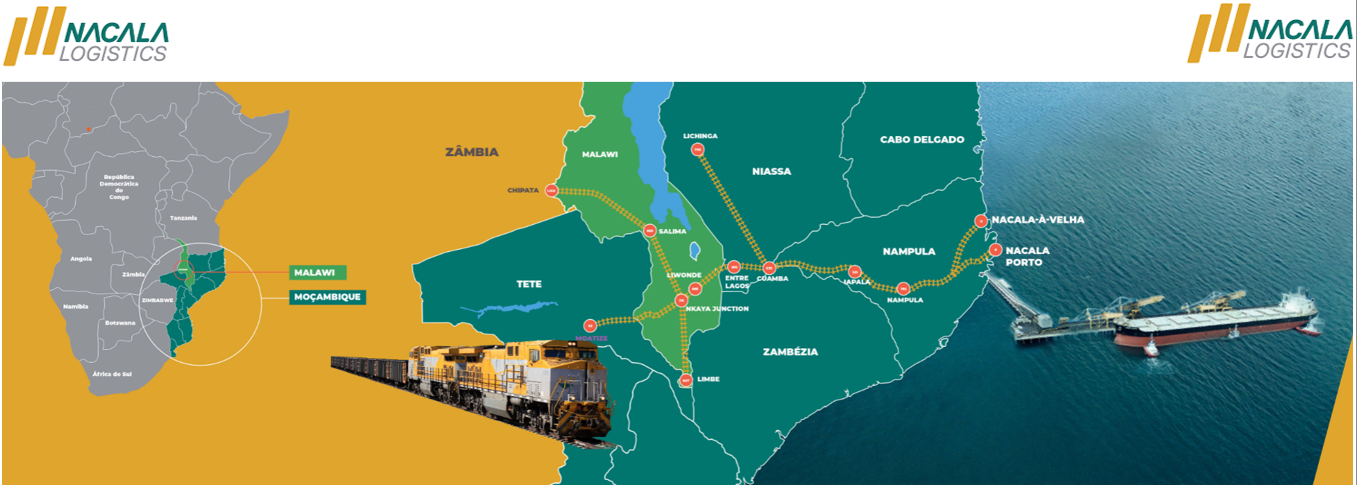
The Nacala Logistics Corridor (NLC) is a critical freight corridor in northern Mozambique and Malawi. The network spans 1680 route-kilometers and is primarily dedicated to moving coal from mines in Malawi and Mozambique to the port of Nacala (see Figure 1). Originally developed by the Brazilian mining company Vale, Nacala Logistics is now owned by the Indian mining company Vulcan, and operated by Nacala Logistics.
The NLC moves 18 million tons of coal annually, and another 4 million tons of general cargo. Annual traffic is 30+ MGT, and is expected to hit 40 MGT by 2028, with 21-ton axle loads. The corridor uses the narrow “cape gage,” which is 1067 mm or 3 ft 6 in, and 115 RE rail. “Because the gage is so narrow, the system is very sensitive to wheel/rail contact geometry, especially in sharp curves,” Yash Sehgal, Technical Director at Vandhana International, told attendees of the 2026 Wheel/Rail Interaction Heavy Haul Conference.
Initial surveys of the corridor indicated widespread deteriorated rail conditions, in terms of wear, rolling contact fatigue (RCF), and profile degradation. For Nacala Logistics, addressing that backlog was a strategic priority, not just a maintenance task. “Nacala Logistics operates one of Africa’s most strategically significant cape-gauge heavy-haul railway systems, connecting inland mining operations, freight services and passenger traffic to the Port of Nacala,” said B.P. Awasthi, Head & COO of Nacala Logistics. “Maintaining wheel-rail integrity across this mixed-traffic network is essential for sustaining operational performance while supporting continued traffic growth and maximizing infrastructure life – which is why we committed to a structured reprofiling program; our goal was to develop a reprofiling strategy to improve wheel/rail performance and to establish preventive measures to control further deterioration,” Sehgal said. Nacala Logistics asked Vandhana to explore options for preventive rail grinding, corrective grinding, and rail milling and to determine the most practical combination for sustainable, ongoing maintenance.
The first priority was to develop an understanding of the historical wear and RCF patterns on the NLC. From there, Vandhana could develop new rail profiles (and maintenance strategies) for conditions peculiar to the corridor. When Nacala Logistics took control of the NLC, the rail hadn’t been reprofiled in over four years, meaning that remnants of the original profiles were fully worn away. “Unfortunately we had no historical wear data going into this. We didn’t have an inspection vehicle or laser profile system. We had to collect baseline wear and RCF data for ourselves using a miniprof and dye-penetrate kit,” Sehgal said.
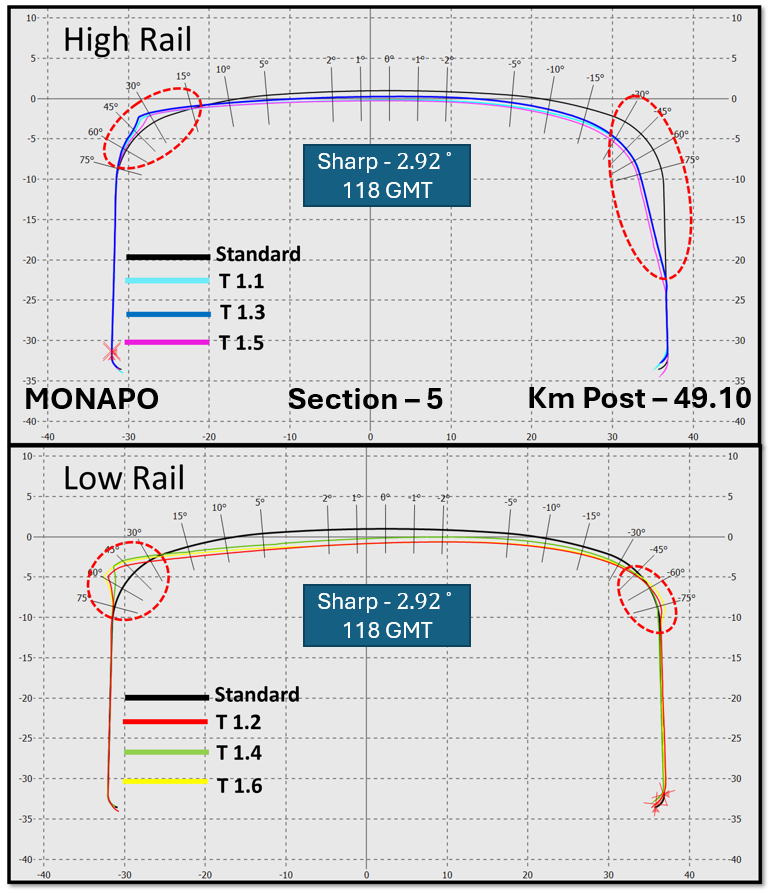
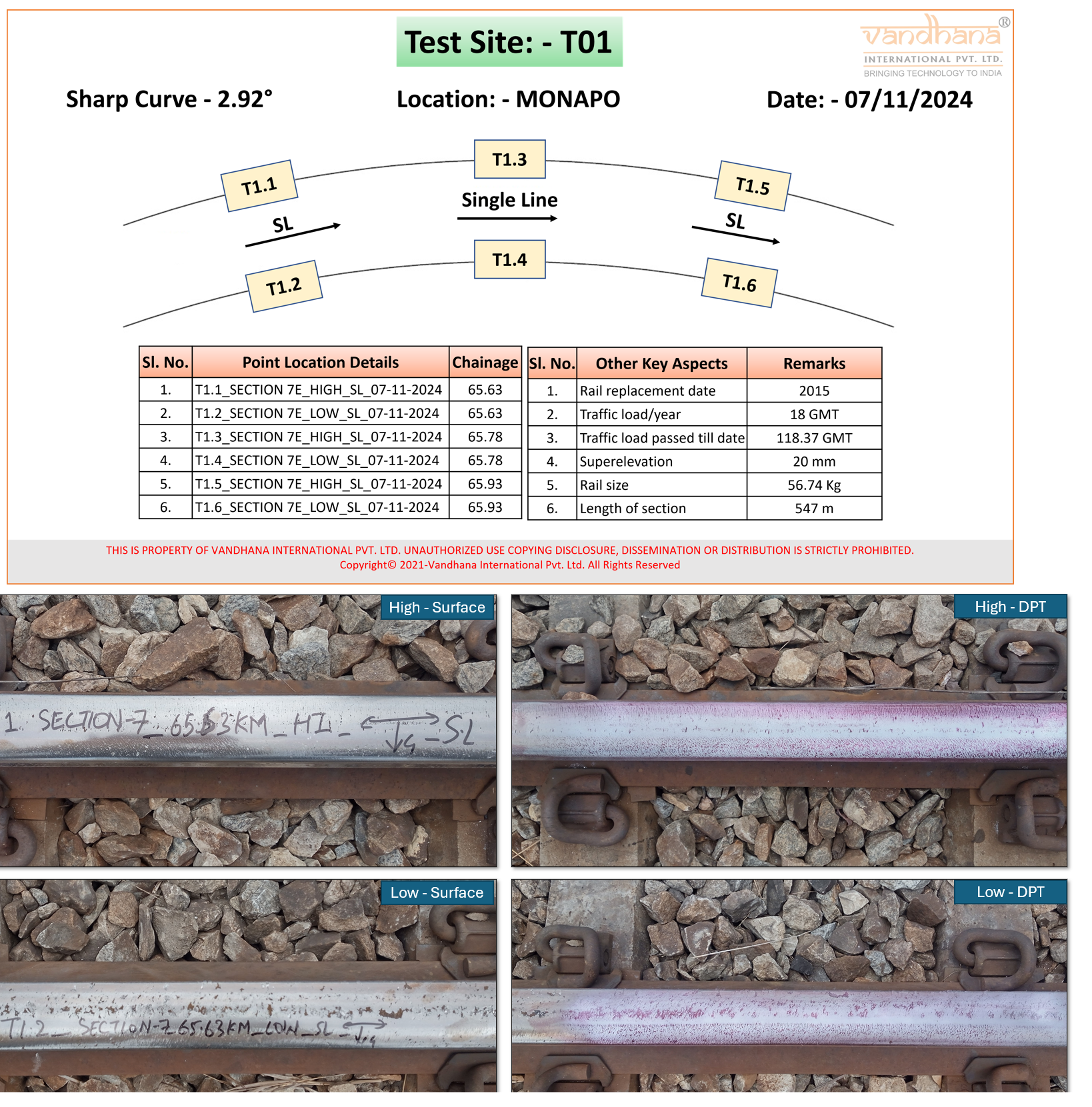
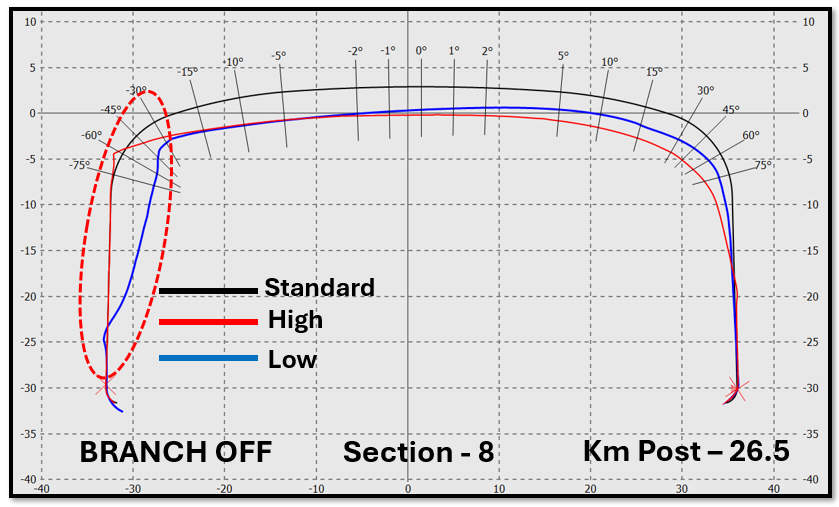
The Vandhana team selected multiple sites at key locations and corridors in the NLC where they took initial, and follow-up measurements. Figure 2 (top) shows a diagram of one of the sites, all of which followed this pattern. The images (bottom) show images of surface conditions from the site both pre- and post-dye-penetrate testing. Figure 3 shows miniprof measurements from the site. This may not look excessive initially, but the rail at this site had been replaced (by Vale) in 2015, and at the time of measurement had accumulated only 118 MGT. “This is a surprising amount of wear at the high-rail gage-face for so few MGTs. And we saw this at nearly every site we tested,” Sehgal said. Figure 3 shows high- and low-rail profile measurements at same site shown in Figure 2; note the high gage-face wear on the high rail (circled in red).
In addition to restoring the rail profile, Vandhana was also tasked with remediating RCF and surface damage in a systemic and sustainable manner that was complimentary to the reprofiling effort. “There were varying levels of RCF crack severity throughout the system and some significant pitting and spalling at many sites in the 0.8- to 1.0 mm-depth range, but this was still recoverable rail,” Sehgal said. There were also sites at which the rail had been transposed to due to high gage-wear, and at some of these locations large pieces of the gage corner had begun to spall or fracture out of the rail (Figure 4 shows a miniprof measurement from one such site).
Baseline measurements and the overall condition of the rail indicated that high stress at the gage corner was a primary culprit for the accelerated wear and damage throughout the corridor, Sehgal said. So, one of the first proposals that Vandhana put forward was to develop and implement asymmetric profiles to better distribute wear across the rail surface. The four profiles they developed, which are shown in Figure 5, were:
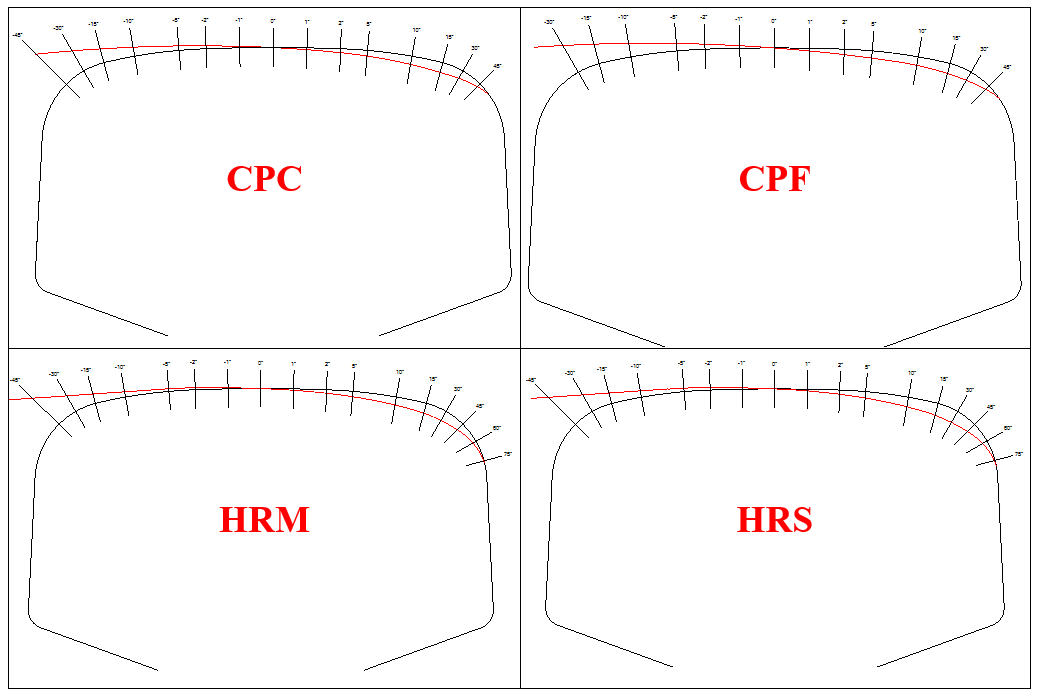
- Contact Point Center, implemented on tangent rack (downline)
- Contact Point Field, implemented on tangent track (upline) and on the low rail of sharp curves.
- High Rail Mild, implemented on up- and down-line mild curves.
- High Rail Sharp, implemented on up- and down-line sharp curves.
“These are typical asymmetric profiles of the type frequently seen on Class 1 railroads in the United States,” Sehgal said.
“Nacala Logistics’ immediate goals were to remove RCF and plastic flow, reset the rail surface condition, and move on to reprofiling,” Sehgal said. “They wanted this done quickly even if it took multi-pass grinding or milling.” In the longer term, Nacala Logistics wanted to shift away from their current corrective maintenance approach to a more structured condition-based maintenance and grinding program.
Vandhana thus proposed that grinding intervals be based on a combination of MGT accumulation, historical wear and defect growth rates, and track geometry (i.e. tangent vs mild/sharp curves). Although Nacala’s track monitoring equipment was limited, Vandhana developed a plan whereby basic monitoring such as miniprof measurement and wear rate analysis, visual inspection, and RCF crack density inspection could be used to inform a preventive maintenance regime. “Nacala was specifically targeting a rail life of 800+ MGT, or roughly another 25-plus years, and they were aware that they had to make significant institutional changes to achieve that figure,” Sehgal said.
From an RCF-control standpoint, Vandhana’s proposal targeted improving wheel/rail contact distribution via the use of asymmetric profiles, and maintaining a schedule of regular, cyclic grinding to arrest RCF crack growth before it reached a critical depth and severity. These are complimentary strategies, since better contact conditions and distribution across the rail surface slows the development of RCF, making it more feasible to maintain a regular preventing grinding schedule, Sehgal said.
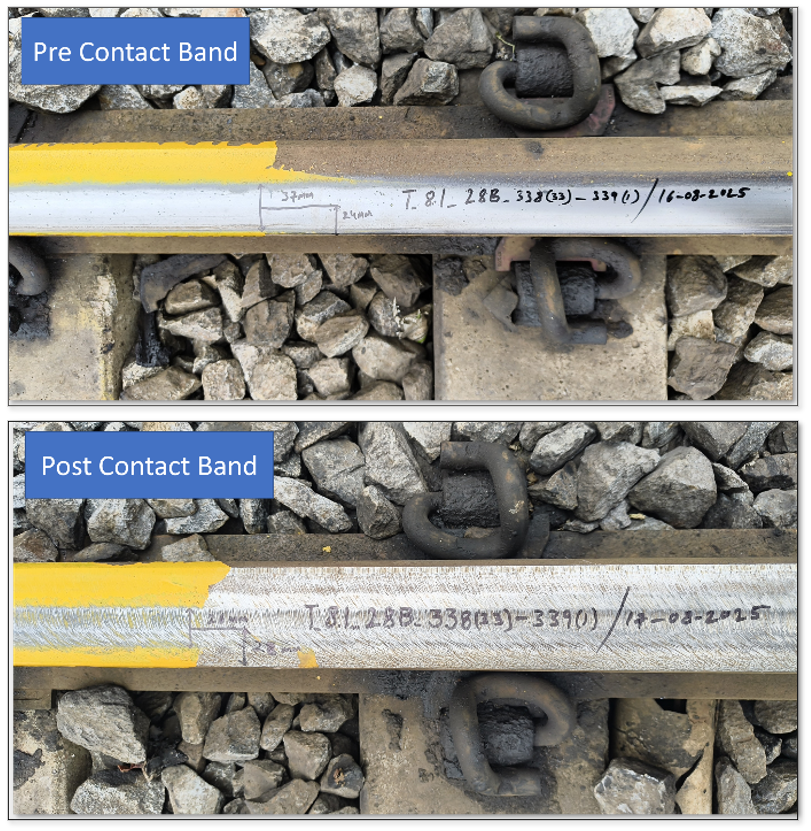
Because Nacala Logistics did not have any direct experience with or data from grinding the NLC at the time, they relied on Vandhana International to provide case studies, evaluation and validation of various grinding strategies to help determine the most suitable program(s) for the NLC, Sehgal said. “We had a bit of difficulty explaining and getting buy-in for things like asymmetric rail grinding at first. But, based on previous studies and grinding work on other railroads, we were able to successfully make the case.” Sehgal also said that even with data to back it up, sometimes a simple demonstration showing pre- and post-grind wheel/rail contact (e.g., by painting the rail) can be an effective tool for swaying the skeptical (see Figure 6).
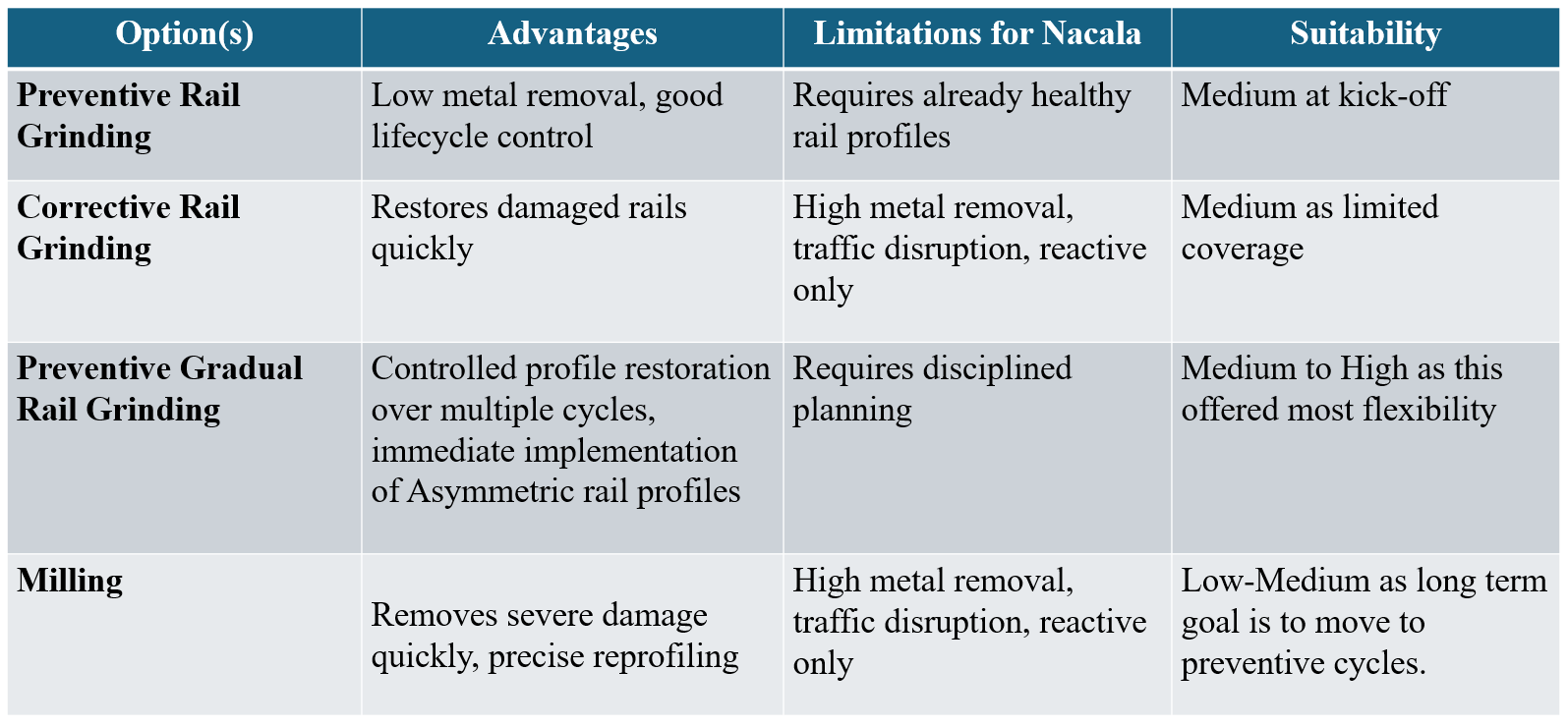
Figure 7 shows a table laying out the rail grinding and milling strategies that Nacala and Vandhana explored, and each strategy’s suitability to the NLC program. Unfortunately, Nacala’s rail was not healthy enough to start grinding at a purely preventive level, Sehgal said, and they lacked the capital to implement a heavy corrective grinding (or even rail milling) program. But a “preventive gradual” grinding program that blended gradual profile implementation with gradual surface defect removal proved to be a satisfactory option in terms of outcome, budget, logistics, and sustainability. “A preventive gradual program offered Nacala the greatest flexibility of available options, and that’s ultimately why it won out.”
The NLC grinding program is currently underway, and as preventive grinding strategy, it is expected to be “underway” indefinitely. Awasthi, who spent more than 25 years as a senior officer with Indian Railways before joining Nacala Logistics, said the approach is proven ground rather than an experiment. “I’ve seen structured, data-driven grinding transform track health across the Indian network over my career and the same principles apply on a cape-gauge heavy-haul corridor like ours – the physics of the wheel/rail interface doesn’t change with the gauge,” he said. Of the Nacala grinding program, he said that it’s important to fit the maintenance program to the maintenance goal, both short and long-term. “It’s possible to implement an effective maintenance program even under budgetary, logistical, or technological constraints.”

Jeff Tuzik is Managing Editor of Interface Journal.
This article is based on a presentation made at the 2026 Wheel/Rail Interaction Heavy Haul conference.