
Interface Journal
The Journal of Wheel/Rail Interaction
Interface Journal
Navigation
  • Home
  • About Interface
  • Contact
  • Wheel Rail Seminars
  • Advertisement & Sponsorship
You are here: Home › Entries tagged with "Eric Magel"
Currently browsing tag

Eric Magel

Figure3

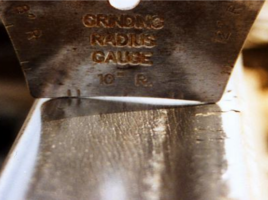
Implementing Rail Grinding and Wheel/Rail Interface Optimization Programs on Heavy Haul and Transit Systems: Lessons Learned

March 27, 2025 | Filed under: Noise and Vibration, Rail Grinding, Rail Maintenance

Rail grinding has evolved significantly since the 1980s, with preventive grinding becoming key for rail maintenance. Eric Magel shares insights from global experiences, highlighting failures due to improper grinding methods and the importance of maintaining optimal rail profiles. Recent advancements in technology and strategies continue to alter rail grinding practices for efficiency and effectiveness.
Shakedown1

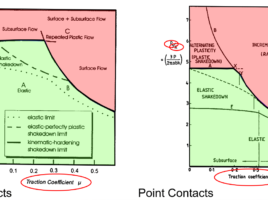
Mitigating Rolling Contact Fatigue: An Overview for 2023

March 5, 2024 | Filed under: Friction Management, Rail Grinding, Wheel/Rail Interaction

by Jeff Tuzik Rolling contact fatigue (RCF) affects railroads and transit systems globally. The effects of RCF damage range from poor ride quality and excessive noise, to shelling and spalling so deep and widespread that rail sections must be replaced. Over time, the railroad and transit industries have developed tools …

Longview2

Investigating Wear and Damage Mechanisms

January 17, 2017 | Filed under: Rail Defects, Rail Maintenance, Wheel/Rail Interaction

WRI 2016, Heavy Haul Part 1 See Part 2 By Jeff Tuzik The Railroad Industry isn’t known for rapid change. Slow and steady progress has generally characterized the industry approach to new technologies, maintenance strategies and operational practices. That’s beginning to change. Some of the changes the industry is grappling …

Practical Rail Grinding

January 3, 2014 | Filed under: Rail Grinding, Rail Maintenance

by Fred Prahl, Eric Magel & Peter Sroba • April 4, 2005 Rail grinding, first developed as a technique for treating corrugations, has become an essential component of track maintenance for freight railroads and transit properties. During the 1960s, railroads began seeing rail corrugations developing to depths of about 0.080 to …

Optimizing Wheel and Rail Profiles on Amtrak’s Northeast Corridor

December 30, 2013 | Filed under: Rail Grinding, Rail Transit, Wheel/Rail Interaction, Wheel/Rail Profile

by Eric E. Magel • September 20, 2004 Wheel wear is an inevitable byproduct of wheel/rail interaction. Excessive wear, however, indicates an imbalance in some aspect of the wheel/rail interface. Amtrak’s high-speed Acela trains, running on track with much greater curvature than other high-speed systems, were quickly found to exhibit very …

Search by Category

Related Articles

  • Mitigating Rolling Contact Fatigue: An Overview for 2023
    In relation to
    Friction Management
  • Implementing Rail Grinding and Wheel/Rail Interface Optimization Programs on Heavy Haul and Transit Systems: Lessons Learned
    In relation to
    Noise and Vibration
  • WRI EU 2015, Part 2: Theory to Practice, Laboratory to Track
    In relation to
    International
  • Practical Rail Grinding
    In relation to
    Rail Grinding
  • Taking the Long View: 20 Years of Wheel/Rail Interaction (Part 1 of 2)
    In relation to
    Rail Grinding

Sponsors

ENSCO
Hollandlogo

© 2026 Interface Journal