
Interface Journal
The Journal of Wheel/Rail Interaction
Interface Journal
Navigation
  • Home
  • About Interface
  • Contact
  • Wheel Rail Seminars
  • Sponsorship
You are here: Home › Page 2

Total Friction Management on CPKC’s Thompson Subdivision and Beyond

August 17, 2025 | Filed under: Friction Management

by Jeff Tuzik In the railroad industry, friction management takes many forms. Managing friction through the application of lubrication and friction modifier products is a key component of maintaining an optimized wheel/rail interface. North American railroads typically use some combination of gage-face lubrication and top-of-rail (TOR) friction modifiers on various …

Autonomous Inspection on CPKC and the Future of Track Inspection

August 3, 2025 | Filed under: Autonomous Inspection, Maintenance, Track Geometry

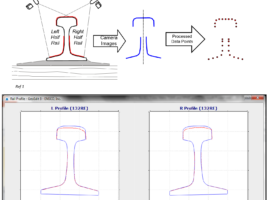
by Jeff Tuzik Track geometry inspection has always been an intrinsic part of railroading. That hasn’t changed and never will. But the way inspections are performed and the data they yield is changing rapidly. Automation is one of the biggest factors in the change, but the sophistication of inspection technologies …

Studs: Squat-Type Defects that are Misunderstood and Mismanaged

July 15, 2025 | Filed under: Rail Maintenance

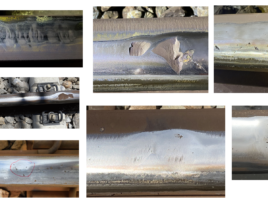
by Jeff Tuzik Squats and studs (squat-type defects) are a topic of discussion and debate in the world of wheel/rail interaction. Their similarity in appearance leads many experienced track people to misidentify them, and the urgency with which they need to be addressed. As previously reported in Squats & Studs: Emergent …

Mike Roney Receives the 2025 Worth Award

June 26, 2025 | Filed under: WRI Conference

by Jeff Tuzik Wheel Rail Seminars named Mike Roney, Principal of Iron Mustache Consulting, and retired General Manager, Track and Structures and Chief Engineer with Canadian Pacific, the recipient of the 2025 Worth Award. The award, presented at the annual Wheel/Rail Interaction Heavy Haul conference, is named for Art Worth, the …

Digging Into Cause Codes for Track-Related Derailments

June 24, 2025 | Filed under: Derailment

by Jeff Tuzik Derailments have many causes. Some are fairly simple and straightforward, others involve a complex combination of factors and circumstances. Determining the root causes is what keeps derailment investigators busy, and what helps railroads avoid such derailments in the future. Over the years, and over the course of …

Taking Stock of 30 Years of Wheel/Rail Interaction

June 2, 2025 | Filed under: Wheel/Rail Interaction

by Jeff Tuzik As Wheel Rail Seminars prepares to host it’s 30th annual Wheel/Rail Interaction Conference in Kansas City, it’s worthwhile to look back on how the “narrow” field of wheel/rail interaction has broadened and matured over the decades. The field of wheel/rail interaction is highly targeted; focusing on the …

SkyTrain: Moving from Reactive to Preventive Rail Maintenance Toward a State of Good Repair

April 1, 2025 | Filed under: Bob Tuzik, Noise and Vibration, Rail Grinding, Rail Transit

by Bob Tuzik This article was originally published in Mass Transit (February 2022). SkyTrain, Vancouver’s iconic rail transit system, is a system in motion. Since the opening of the original Expo Line, named and timed to coincide with Expo 86, SkyTrain, which moves more than 115 million commuters per year pre-covid, …

How Sound Transit Controls Train-Borne Noise

March 31, 2025 | Filed under: Bob Tuzik, Noise and Vibration, Rail Grinding, Rail Transit

by Bob Tuzik This article was originally published in Mass Transit (June 2023). Challenges abound in the design, construction, maintenance, and operation of light rail lines in urban areas. Chief among them is controlling track- and vehicle-born noise, an important part of maintaining the support of an agency’s various stakeholders, …

Vehicle Design: Managing Wheel/Rail-Generated Noise and Vibration from the Ground Up (Part 2)

March 31, 2025 | Filed under: Briony Croft, Noise and Vibration, Vehicle Design, Vehicle/Track

By Jeff Tuzik This article was originally published in Mass Transit (June 2024) in conjunction with the annual Wheel/Rail Interaction Rail Transit conference. In part 1 of this article, a group of experts, including a transit operator, three vehicle manufacturers, and a noise and vibration consultant, examined how to mitigate wheel/rail-generated noise at the …

Vehicle Design: Managing Wheel/Rail-Generated Noise and Vibration from the Ground Up (Part 1)

March 31, 2025 | Filed under: Noise and Vibration, Vehicle Design, Vehicle/Track

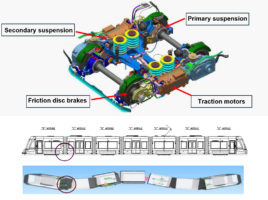
The article discusses the challenges of vibration and noise in rail transit operations, emphasizing the importance of vehicle design and technology in mitigating these issues. Key design factors, such as unsprung mass and suspension characteristics, significantly impact performance. Strategies from experts and case studies highlight the complexities of optimizing vehicles for noise and vibration control.

← Previous Page
Next Page →

Search by Category

Related Articles

  • Vehicle Design: Managing Wheel/Rail-Generated Noise and Vibration from the Ground Up (Part 2)
    In relation to
    Briony Croft
  • Engineering the Wheel/Rail Interface for Rail Transit
    In relation to
    Rail Transit
  • Reducing Noise and Vibration on NYCT
    In relation to
    Friction Management
  • Examining wheel/rail interaction on rail transit systems
    In relation to
    Friction Management
  • How Sound Transit Controls Train-Borne Noise
    In relation to
    Bob Tuzik

Sponsors

ENSCO

© 2025 Interface Journal