Currently browsing category
Foundations
Protected: The Theory & The Praxis: A Practical Introduction to Wheel/Rail Interaction. Part 1.
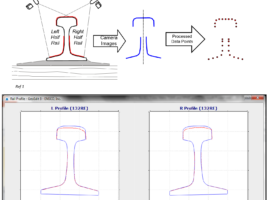
A Primer on Vehicle and Track Measurement Systems
by Jeff Tuzik Measurement is the foundation of design, optimization, and maintenance. No system functions without accurate measurement, and the railroad is no exception. But measurement systems used in the industry have a come a long way since the days of the string line and protractor; the contemporary array of …
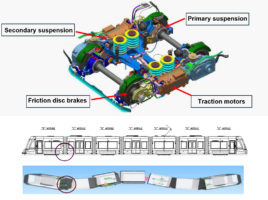
Vehicle Stability in the Rail Transit Environment
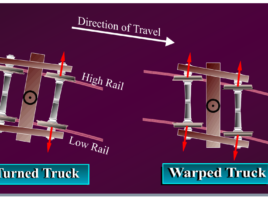
by Jeff Tuzik Vehicle stability is of paramount concern in the rail transit environment. It affects safety, ride quality, and wear and damage on the track, wheels, trucks, and suspension. In turn, stability is largely defined by the interplay of track characteristics, wheel and rail profiles, and truck and suspension …
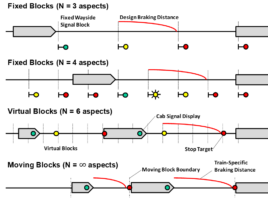
Train Control Systems, Electrification, and Automation: Considering the Near Future of Railroading
by Jeff Tuzik Understanding and improving wheel/rail interaction requires unwavering attention to the little details that can have a big effect. It’s what we do here at Interface Journal and what we talk about at the annual Wheel/Rail Interaction conferences that we participate in. But every now and then, it’s …
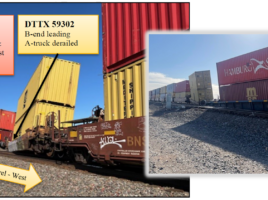
The How and Why of L/V-based Thresholds
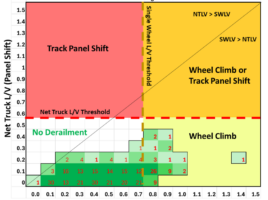
by Jeff Tuzik The L/V ratio is a ubiquitous measurement in the world of wheel/rail interaction. It is typically combined with the Nadal limit, functioning as shorthand for wheel climb derailment risk for a given set of conditions. But the L/V ratio and the various formulae used to set risk …