Interface Journal
The Journal of Wheel/Rail Interaction
Interface Journal
Navigation
  • Home
  • About Interface
  • Contact
  • Wheel Rail Seminars
  • Advertisement & Sponsorship
You are here: Home › Page 5
Surface initiated TDs

Mitigating Transverse Defects and Reducing Non-testable Areas: Grinding Strategies at CSX

August 6, 2024 | Filed under: Measurement Systems, Rail Grinding, Rail Maintenance

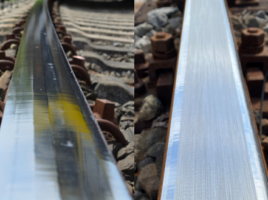
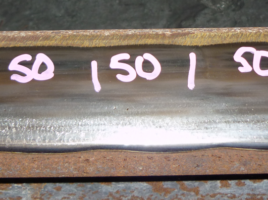
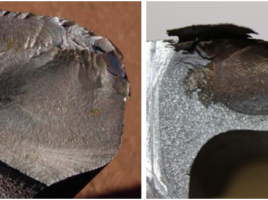
Transverse defects (TDs) pose significant challenges for freight railroads, causing 31% of broken rails. CSX has enhanced its rail grinding program since 2016, reducing non-testable locations by 98% and TD occurrences by 37%. Effective grinding mitigates the risks of TDs, improves ultrasonic detection, and balances defect removal with rail profile maintenance.

Grassie award

Stuart Grassie is the recipient of Wheel Rail Seminars’ 2024 Worth Award

June 21, 2024 | Filed under: Rail Transit, Wheel/Rail Interaction, WRI Conference

by Jeff Tuzik Stuart Grassie, Principal, Rail Measurement Ltd and Stuart Grassie Engineering Ltd, is the recipient of the 2024 Worth Award. The award, presented by Wheel Rail Seminars at the annual Wheel/Rail Interaction conference in May, is named for Art Worth, who was Manager of Standards and retired as …

Image

An Introduction to Rail Grinding on the Delhi Metro

June 21, 2024 | Filed under: International, Rail Grinding, Rail Transit

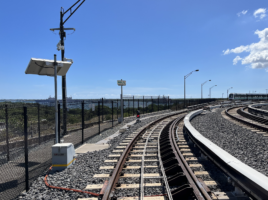
The Delhi Metro Rail Corporation (DMRC) has successfully implemented a rail grinding program to address surface defects like corrugation and rolling contact fatigue. Operating 390 km of track, DMRC’s corrective and preventive measures have improved rail conditions significantly since 2009, leading to reduced wear rates and enhanced wheel/rail dynamics.

Figure

New Approaches to Dynamic Wheel Force Measurement – Part 2

April 9, 2024 | Filed under: Heavy Haul, Measurement Systems, Wheel/Rail Interaction, WRI Conference

The article discusses advancements in wheel condition monitoring technologies, particularly by Mermec and MxV Rail. Various methods, including optical and strain gauge systems, gather data on dynamic forces and out-of-roundness. Enhanced systems promise improved predictions of hunting behavior and overall wheel integrity, increasingly complementing traditional inspection techniques in railways.

Figure

New Approaches to Dynamic Wheel Force Measurement – Part 1

March 29, 2024 | Filed under: Measurement Systems, Vehicle/Track, Wheel/Rail Interaction, WRI Conference

The article discusses the significance of wheel/rail interaction in railroading, emphasizing the importance of both wheels and tracks. Advances in monitoring technologies, such as continuous wheel condition monitoring and load detectors, enhance safety and maintenance. It highlights challenges and improvements in measuring forces effectively, contributing to efficient railroad operations.

Shakedown1

Mitigating Rolling Contact Fatigue: An Overview for 2023

March 5, 2024 | Filed under: Friction Management, Rail Grinding, Wheel/Rail Interaction

by Jeff Tuzik Rolling contact fatigue (RCF) affects railroads and transit systems globally. The effects of RCF damage range from poor ride quality and excessive noise, to shelling and spalling so deep and widespread that rail sections must be replaced. Over time, the railroad and transit industries have developed tools …

Tamping curve

Smart Rocks, Smart Tamper: Investigating the Mechanics of Ballast Tamping

December 20, 2023 | Filed under: Ballast, Measurement Systems, Tamping

by Jeff Tuzik There are many forces that work to deteriorate track geometry over time. These forces don’t begin and end at the wheel/rail interface, they are transmitted to the vehicles and their components, and into the track structure and its components. On ballasted track, ballast absorbs these forces; and …

Post grind stud

Squats and Studs: Emergent Damage Mechanisms on Rail Transit Systems

November 25, 2023 | Filed under: Rail Defects, Rail Grinding, Rail Maintenance

By Jeff Tuzik The unforgiving environment of the wheel/rail interface creates many damage mechanisms. These manifest in defects as varied as corrugations, rolling contact fatigue, and gage-corner cracking, to name only a few. Among the most vexing defects that commuter, transit and high-speed rail lines contend with are squat-type defects …

Montoya lede

Measuring and Designing Rate of Change in Track Alignment

November 24, 2023 | Filed under: Rail Maintenance, Track Geometry, Vehicle/Track

by Jeff Tuzik In order to solve a problem, you have to be able to measure it. And while there are generally no new problems in railroading, tools and techniques of measurement continue to evolve. Over the years, engineers at the Union Pacific Railroad have noticed a deficit in traditional …

P1090272

MRS Logística: A History of Innovation and Optimization

November 8, 2023 | Filed under: Heavy Haul, Wheel/Rail Interaction

by Jeff Tuzik Some challenges in the railroad industry are local, some are universal. Brazil’s MRS Logística has met its share of both. Their efforts to maintain, modernize, and optimize their network over the past 30 years highlight the importance of approaching all challenges from a system-wide perspective, and of …

← Previous Page
Next Page →

Search by Category

Related Articles

  • Using Elastic Components to Improve Rail, Tie, and Ballast Life
    In relation to
    Ballast
  • Practical Rail Grinding
    In relation to
    Rail Grinding
  • Modelling Success and Predicting Failure at the Wheel/Rail Interface
    In relation to
    Heavy Haul
  • Mike Roney Receives the 2025 Worth Award
    In relation to
    WRI Conference
  • Big Challenges, Big Opportunities: Big Data
    In relation to
    Wheel/Rail Interaction

Sponsors

ENSCO
Hollandlogo

© 2026 Interface Journal